The Smartphone Era Is Settling Down
For more than a decade, the smartphone has been the center of our digital lives. We wake up with it, work on it, and unwind with it. But despite how essential it is, the excitement around smartphones has clearly slowed.
New models feel familiar. Better cameras, slightly faster chips, marginal battery gains — useful, but not revolutionary. The smartphone has quietly shifted from an innovation icon to a utility, much like a washing machine or a toaster: indispensable, yet uninspiring.
Because of this shift, tech giants envision future beyond smartphones. Companies like Apple, Meta, and Samsung are investing billions into new categories of future tech that aim to reduce our dependence on phone screens — or at least push them into the background.
This article explores where that future is heading: smart glasses, spatial computing, invisible wearables like rings, and why some screenless AI devices failed along the way.
Rather than betting on one replacement device, the industry is experimenting with multiple form factors: smart glasses, spatial computing headsets, invisible wearables like rings, and AI-powered assistants that operate quietly in the background. Some of these bets are paying off. Others have failed publicly and expensively.
This article explores where that future is heading, what’s working, what isn’t, and why the smartphone is likely to fade into the background rather than disappear entirely.
The End of the Smartphone Honeymoon
Why Big Tech Is Hunting for the Next Platform?
The global smartphone market has hit a plateau. Shipments have stabilized rather than grown, especially in mature markets. Most people already own a capable phone and upgrade less frequently than before.
What’s causing the slowdown?
🔶 Market saturation — nearly everyone has a smartphone
🔶 Longer upgrade cycles
🔶 Innovation fatigue from small, incremental changes
Users no longer feel urgency to upgrade every year. For tech companies, this is a warning sign.
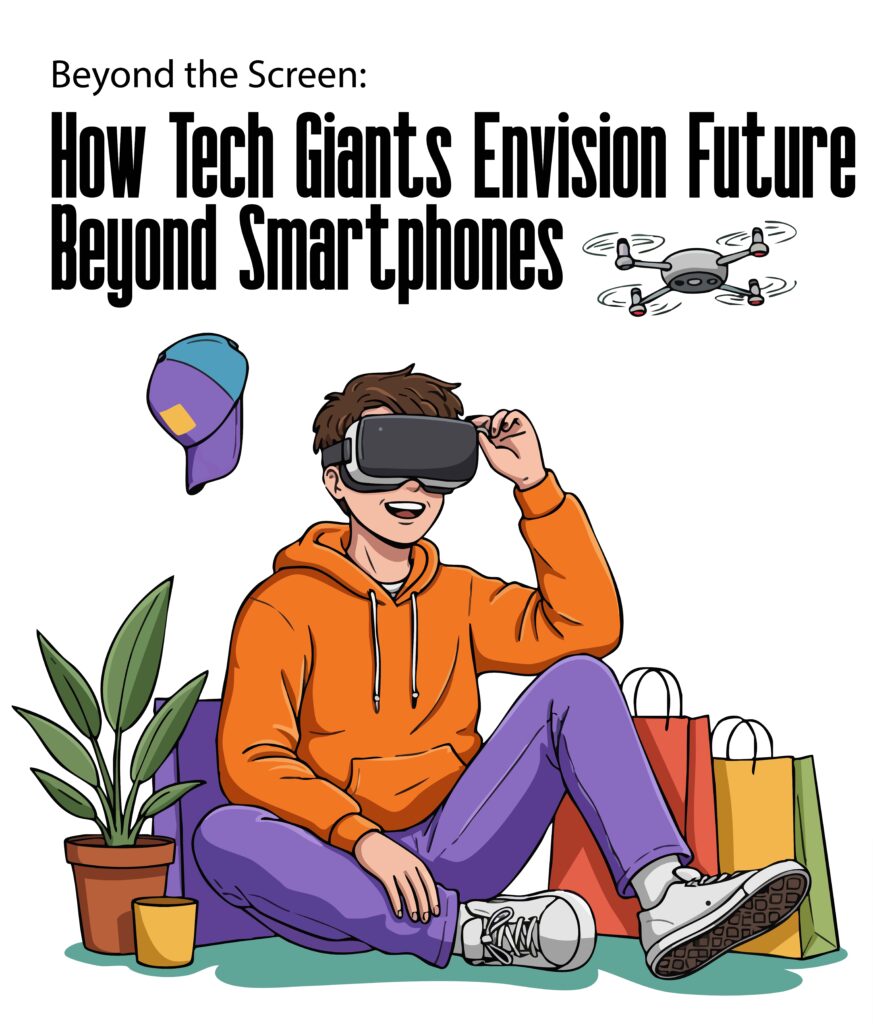
Hardware platforms drive ecosystems, services, and long-term revenue. Without a new platform, growth stagnates. That’s why tech giants envision future beyond smartphones not as a luxury, but as a necessity. Whoever defines the next dominant interface will shape the next decade of computing.
As the smartphone market matures, it becomes clear why Tech Giants Envision Future Beyond Smartphones as a strategic necessity rather than a distant experiment. When growth slows and innovation feels incremental, Tech Giants Envision Future Beyond Smartphones to unlock new revenue streams, redefine user interaction, and regain momentum.
From Apple’s long-term spatial computing vision to Meta’s push into wearable interfaces, Tech Giants Envision Future Beyond Smartphones as the foundation for the next computing era. This shift explains why Tech Giants Envision Future Beyond Smartphones through glasses, rings, and AI-driven ecosystems instead of betting on a single replacement device. In this context, the smartphone is no longer the destination — it’s the launchpad.
WordPress | Elementor | Happy Addons |
|---|---|---|
Design |
tech-heavy, Visible |
Stylish, Familiar |
Social Comfort |
Awkward |
Normal |
Target users |
Developers |
Everyday Consumers |
The Shift in User Behavior
Consumer behavior is also evolving. People no longer want to stare at screens for every interaction. Instead, they prefer ambient, invisible technology that works in the background. This is why smart rings and wearable sensors are booming: they track sleep, heart rate, and other biometrics without demanding attention, letting users focus on their day.
Smart Glasses: Where Technology Meets Fashion
When Wearables Finally Look Normal
Early attempts at smart glasses failed for a simple reason: they looked like experiments, not products. Google Glass was technologically impressive but socially uncomfortable. Wearing it felt like announcing yourself as a test subject rather than a consumer.
The new generation of smart glasses learned from that mistake. Instead of leading with technology, they lead with design.
Why Ray-Ban Meta Glasses Succeeded
Ray-Ban Meta smart glasses look like regular sunglasses — and that’s exactly why they work.
What makes them appealing:
🔷 Familiar Ray-Ban designs
🔷 Built-in camera and microphones
🔷 Hands-free photos, videos, and music
🔷 Voice-controlled AI assistance
Instead of asking users to adapt to technology, the technology adapts to their lifestyle.
Spatial Computing: Apple’s Long Game
From Holding the Internet to Living Inside It
Apple’s approach to the post-smartphone era is different. Rather than replacing the phone outright, Apple is expanding the environment around the user through spatial computing.
The Vision Pro represents this strategy. It’s not a mass-market device yet — and Apple knows that. Its current limitations are obvious: high price, noticeable weight, and limited daily wearability.
But Vision Pro isn’t about today’s sales numbers. It’s about establishing a new interaction model.
Spatial computing shifts digital experiences from flat screens into three-dimensional space. Workspaces become immersive. Entertainment becomes surrounding. Information exists around you, not just in front of you.
The long-term goal is clear: shrink this technology into lightweight glasses that feel as natural as eyewear. When that happens, the smartphone becomes optional rather than central.
Old vs New Smart Glasses
Feature | Google Glass (OLD) | Ray-Ban Meta (New) |
|---|---|---|
Design |
tech-heavy, Visible |
Stylish, Familiar |
Social Comfort |
Awkward |
Normal |
Target users |
Developers |
Everyday Consumers |
This shift proves an important lesson: wearable tech must blend in, not stand out.
Why Smart Rings Are Taking Off
Brands like Oura and Samsung are proving that passive wearables have real demand.
What smart rings do best:
🟢 Track sleep and recovery
🟢 Monitor heart rate and temperature
🟢 Work 24/7 with minimal interaction
Health Tracking Without the Screen Time
While glasses aim to replace visual interaction, smart rings focus on something else entirely: passive data collection.
Devices like the Oura Ring and Samsung Galaxy Ring are gaining traction because they do not demand attention. They work silently, continuously, and efficiently.
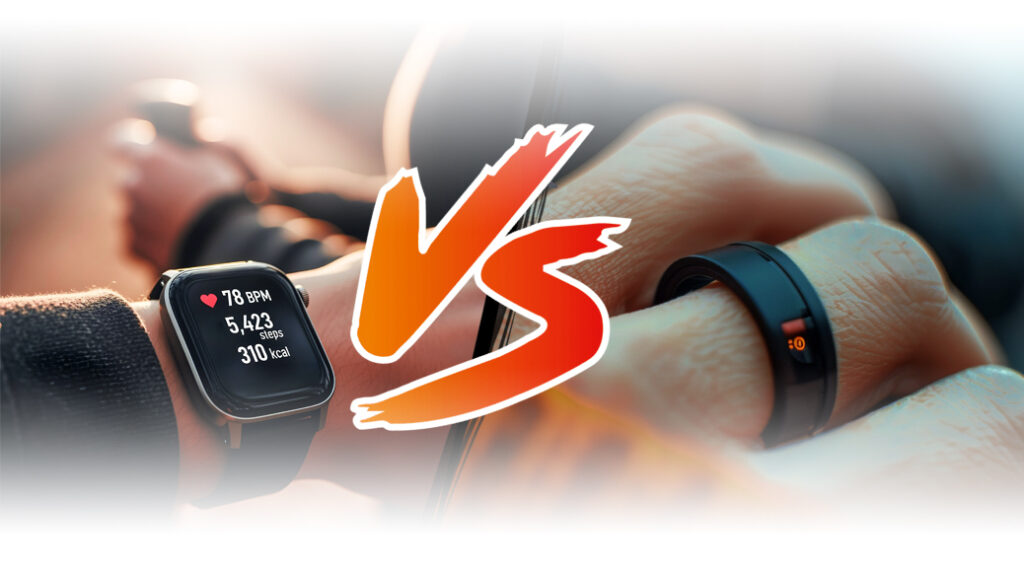
Smart Ring vs Smartwatch
Feature | Smartwatch | Smart Ring |
|---|---|---|
Screen |
Yes |
No |
Attention required |
High |
Normal |
Battery life |
1–2 days |
5–7 days |
Comfort |
Medium |
High |
This shows how wearable tech is shifting from screens to sensors.
When combined with wearable sensors like rings or smart clothing, mixed-reality experiences are no longer isolated; they become part of a holistic ecosystem that monitors health, delivers productivity insights, and enhances daily tasks. This synergy is precisely why Tech Giants Envision Future Beyond Smartphones as a distributed, interconnected platform rather than a single device replacement.
Why We Aren’t Ready to Ditch Displays Completely
Not every attempt to move beyond the smartphone has succeeded. Devices like the Humane AI Pin and Rabbit R1 promised a screen-free future powered by voice and AI.
The reality fell short.
Daily usage numbers remained low. Return rates were high. Users struggled with tasks that were effortless on phones.
The lesson was clear: voice interfaces alone are not enough. Visual feedback still matters for navigation, confirmation, and trust. Removing screens entirely created friction instead of freedom.
The mistake wasn’t ambition — it was timing. These devices tried to replace smartphones before offering a better experience.
On-Device AI: The Hidden Connector
Why AI Is the Real Game-Changer
The future isn’t about one device doing everything.
It’s about an ecosystem of smart devices working together — powered by on-device AI.
What On-Device AI Enables
🔷 Faster responses
🔷 Better privacy
🔷 Offline intelligence
Phones, glasses, and rings can share context while keeping data secure.
The New Tech Stack
🔷 Smart glasses → visuals and real-time assistance
🔷 Smart rings → health and biometric data
🔷 Smartphone → background hub
🔷 AI → glue holding it all together
The smartphone doesn’t disappear — it just stops being the main character.
As these technologies move beyond experimental labs and into everyday products, the conversation is no longer just about innovation — it’s about usability, creativity, and real-world impact. Platforms like Vinlyee regularly explore how emerging AI tools and tech trends translate into practical workflows for creators, developers, and digital professionals.
Looking ahead, it is clear that Tech Giants Envision Future Beyond Smartphones not just as isolated devices, but as interconnected ecosystems where AI, wearables, and glasses work together seamlessly. By investing in multiple form factors simultaneously, Tech Giants Envision Future Beyond Smartphones to ensure that the next wave of hardware can integrate naturally into daily life.
These companies understand that user adoption depends on convenience and continuity, which is why Tech Giants Envision Future Beyond Smartphones through solutions that complement smartphones rather than outright replace them. From passive health-monitoring rings to immersive spatial computing, Tech Giants Envision Future Beyond Smartphones with the goal of creating a unified, intelligent ecosystem. Ultimately, this strategic vision explains why Tech Giants Envision Future Beyond Smartphones is the guiding mantra behind billions in R&D spending and forward-looking product design.
How the Digital World Is Moving Beyond Screens
While smart glasses and wearable rings are gaining traction, the next frontier is mixed-reality experiences. Unlike traditional screens, mixed-reality devices blend digital objects with the physical world, creating interactive environments that feel natural and intuitive. Tech giants are pouring billions into this space because they see it as the next platform where users will spend attention, time, and money.
Apple, Meta, and other innovators are not just building hardware; they’re creating entire ecosystems. These ecosystems are designed to work across devices, from glasses to phones, and increasingly with voice and gesture interfaces. For instance, AR navigation overlays can now appear directly on your Ray-Ban Meta glasses while a spatial computing headset provides a 3D workspace for designers or engineers.
The appeal of mixed reality goes beyond novelty. It addresses a long-standing limitation of smartphones: the screen is always two-dimensional and confined. Mixed-reality experiences allow users to interact with information in three-dimensional space, providing richer context, enhanced collaboration, and even improved ergonomics. Imagine moving a 3D model of a building around your desk for design review, or receiving real-time notifications directly in your field of view without checking your phone constantly.
This shift explains why Tech Giants Envision Future Beyond Smartphones as more than just wearable gadgets. They see a future where the digital layer augments reality itself. Companies like Meta are already experimenting with social VR platforms, while Apple is focused on immersive productivity with Vision Pro. Even gaming, entertainment, and education are becoming testbeds for this technology.
Why Consumers Will Adopt Mixed Reality
Adoption depends on more than just technological possibility — it requires convenience, comfort, and social acceptance. Early devices like Google Glass failed because they were awkward and conspicuous. Modern smart glasses, combined with mixed-reality headsets, emphasize:
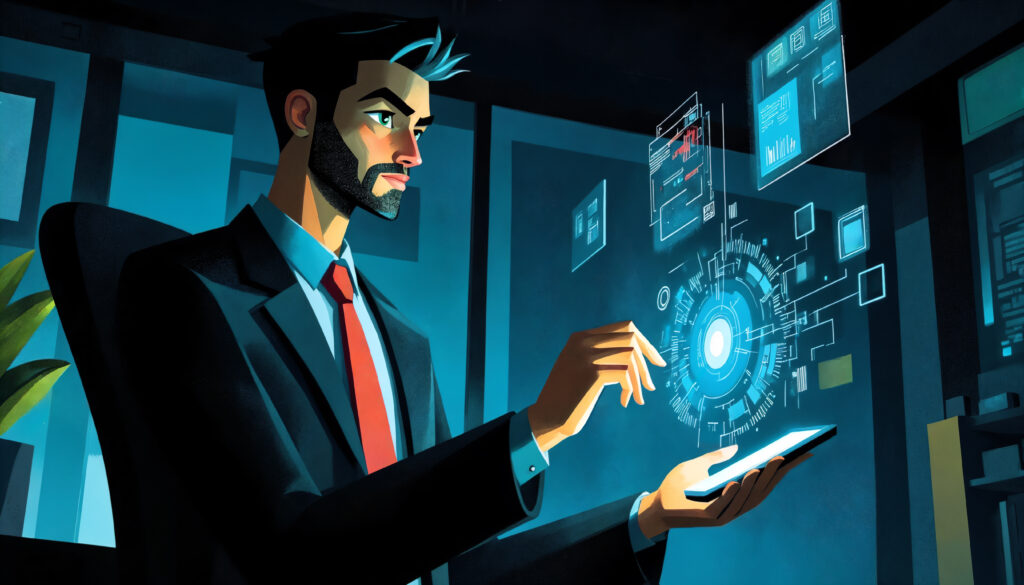
🔘 Design first: Stylish and familiar form factors
🔘 Hands-free interaction: Voice, gestures, and AI assistance
🔘 Seamless ecosystem integration: Works with smartphones, rings, and other devices.
This thoughtful design approach increases the likelihood of widespread adoption, which is why Tech Giants Envision Future Beyond Smartphones strategically across multiple categories rather than betting on a single form factor.
A Hybrid Future
The smartphone isn’t dying. It’s evolving.
Instead of being the center of everything, it’s becoming part of a broader system of smart devices.
The future belongs to:
🔷 Wearables that blend into daily life
🔷 Devices that reduce screen time
🔷 Technology that feels natural, not demanding
In short, Tech Giants Envision Future Beyond Smartphones not as an immediate replacement, but as a step toward a hybrid ecosystem, blending traditional mobile interfaces with next-generation immersive experiences. This strategic vision will define the next decade of consumer technology, shaping how we work, play, and interact with information.
As future tech matures, the question isn’t whether smartphones will vanish — it’s whether users are ready to let them step aside.
If you’re interested in how AI-driven tools and next-generation interfaces will affect creators and digital professionals, platforms like Vinlyee continue to track these shifts from a practical, user-first perspective.
Will your digital world remain trapped inside a pocket-sized screen?
Or are you ready to wear your computer instead?